Let’s forget communion?

Thought you might find this blog post interesting. It’s by Caleb Trimble, called “Let’s Forget About Communion“.

As Caleb writes in his blog:

We don’t gather to make church cool.
We don’t gather to make the unchurched feel welcomed.
We don’t gather for an awesome worship experience.
We don’t gather for a sermon that makes us think.
We don’t gather to spend time with our friends.

We gather for communion. Because in communion, everything begins to make sense. In communion, friends and enemies come together. In communion, Christ’s Kingdom is experienced. In communion, the church finds its hope. In communion, Christ is present and exalted.

It is time to bring into focus this sacrament.

Open TableA great read, passed through to me by Noel Payne–thanks mate. Fits in really well as stimulus for our next Open Book discussion on Thursday June 18 at our place, called “Hospitality & Home-Bake”. Check out the Ana Maria Pineda 12 page chapter on Hospitality here. The big question: “What does hospitality look like in my life, and how can I extend God’s table grace to others?” This week will give a taste of “Open Table” which we hope to start later in the year.

So, bring some food to share, and a story to tell at the heart of your experience of giving and receiving hospitality. And let’s enjoy together God’s eucharist, courtesy of Christ.

Blessings, Nik and Dave

Are Practices Passé

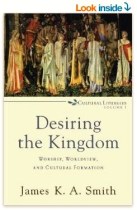
desiringkingdomFrom the get go, we’ve built Christ’s Pieces around a conviction: Christian practices matter.

As we’ve explored in Open Book, working through James Smith’s Desiring the Kingdom, it’s not enough to be informed and have all your beliefs in order. Plenty of people believe right in the cognitive sense, but their lives are functionally unredeemed. Instead, we need to train, to discipline, to form our bodies. Only then will we be transformed. Paul’s teaching in Colossians 3 about “putting off” the old and “putting on” the resurrected life may come to mind.

What, then, are Christian practices?

Toying with dozens of definitions, here’s how we’ve characterised it for Christ’s Pieces.

Christian practices are

… rich and repetitive actions we do,
over time and often together,
which engage our senses and imagination,
reminding us of God’s presence
and aiming us at His Kingdom

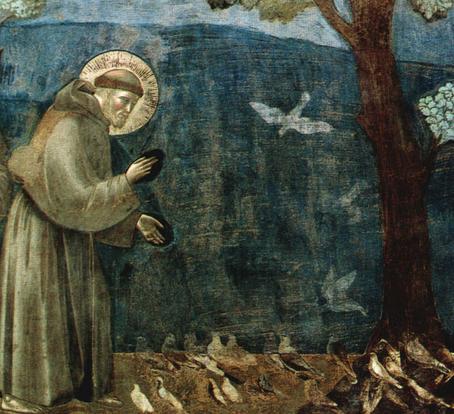
heshenThus far we’ve experimented with scented oil, signing the cross to symbolise Christ’s full ownership of our lives. And, last week, we cut out hessian squares, representing the rough garb of St. Francis who traded down to find transformation. My hessian square sits in my wallet, on top of my visa card. Each time I open my wallet to spend, it reminds me to pray. “God, this money is yours. Help me live simply. What would you have me leverage this money for?” (Thus far it’s saved me a tidy sum, going for the standard latte over the coffee drinking bowl with scones on the side!)

But, let’s be honest. Practices are somewhat passé today. They’re inconvenient. They threaten my autonomy, training me by submitting to some higher rhythm. (Put your hand up if you put something aside this lent?) For Protestants, they raise flags of legalism, works righteousness, and that kind of hocus pocus reliance on ritual that went out with the Reformation.

At root, though, I suspect our reluctance to experiment with practices boils down to a chronological snobbery. They seem so old fashioned. Haven’t we moved past the dark ages of disciplining desire? Why not just be “free” and follow my feelings? Why constrain my worship to particular ways of being?

With all of this in mind, I was interested to see Q Ideas post this week’s conversation.

(Q Ideas is an American outfit of evangelicals, led by Gabe Lyons–author of both “UnChristian” and “The Next Christians: Seven Ways You Can Live the Gospel and Restore the World”. But, before you dismiss it, they’re asking the right questions, and are explicitly oriented to engaging culture rather than fleeing or taking it over for Christ. Their driving desire is to work from today’s most pressing questions to find common ground and ideas that truly serve the common good. So, perhaps worth a look.)

Here’s their conversation starter for Easter 2015:

historic practicesLooks like they’re exploring some similar themes. How timely.

Rather than steal their thunder, it may suffice to note that at each turn, they’re convinced that practices like gratitude, simplicity, Sabbath and rest, even solitude, silence and stillness, are *crucial* in a crazy world like ours. We have all the freedoms in the world, and yet we lack the forms which channel our energy toward liberation and wholeness.

We’re like modern artists more concerned with expressing ourselves than patiently sitting at the feet of a master and learning the artist’s way, imitating one brush stroke after another. Lacking any “rules” or bounds within which to paint a kingdom vision, we splash our immature selves onto the canvas, calling it “witness” and yet confusing an onlooking world.

Could it be that we need:

Less anarchy, more life?Indigenous art, available at link

Less information, more transformation?

Less me, more we?

Less independence, more interdependence.?

And, perhaps, in our low commitment, novelty-addicted and somewhat narcissistic culture, we need

less flexibility, more love.

Perhaps practices are not so passé after all?

What “rituals” and “liturgies” do you lean on in your everyday? How do these bodily practices form habits that aim your heart toward God’s Kingdom?

Post away! I’m keen to hear about your experiments, so we might truly be a community of practice.

Transforming Work

This is more of a plug than a post, but anyway!

How does the following quote from Mark Green, at London Institute for Contemporary Christianity (LICC), strike you?

Here in the UK, the church’s primary mission strategy has been:

‘To recruit the people of God to use some of their leisure time to join the missionary initiatives of church-paid workers.’

LICCIt’s a strategy that has yielded much fruit – in evangelism, in social action among the poor, the young, the old, the disadvantaged, as well as in reaching out to the rich, the adult and the privileged. Praise God for the ability of church leaders to mobilise their communities for such mission. Still, this is mission that most Christians can only participate in during their leisure time. What about the rest of their time?

The reality is that 98 percent of Christians – i.e. those not in paid church work – are not properly envisioned or equipped for their mission in the 95 percent of their waking time that they aren’t involved in church activities, wherever that might be – workplace, schoolplace, clubplace. And that is a tragic waste of the church’s missional potential. Too few Christians have eyes to see what God might be doing in the places they already naturally spend their time, and where they already have relationships with those who don’t know Jesus.

Pastoring is tricky business. It’s natural to give the most energy and attention to what we are invested into. For many pastors, this means that the Sunday gathering typically points back to what God is doing in and through the church gathered. This is all good stuff. But, it leaves many people wondering how their faith relates to their every working life.

But what if the tables were turned? What if the main stories we tell, the big wins we celebrate when gathered, are first and foremost about God’s work in our mundane existence? God’s love expressed through our labour? God’s creativity pulsing through our common work of cultivating the world?

It’s these kind of questions that drive Malyon College’s Workplace Centre.

On Saturday 20 June, they’ve put together a really varied group of speakers from across Australia, and a fantastic diversity of workshops, all aimed at one thing:

How do we Transform Work, bridging the Sunday–Monday gap?

I’ll kick it off by laying a theology for work—that all of life is ‘sacred’ to God, so we can serve Him fully in our so-called ‘secular’ lives. From there you’ll hear from experts in the marketplace who live their faith, helping others to do so as well, through their career. There’s also some great stuff for those in ‘church/parachurch’ ministry, to help turn the focus outwards.

Enough said. Check out Transforming Work, and hopefully I’ll see you there!

A Rest-less Sabbath: musings from my inner voice

What does it mean in Genesis 2:2 that on the seventh day, “God rested”? God … the all powerful, all present, benevolent and active God who doesn’t sleep or slumber but who watched over us … God rested?

restWhy? What’s the point of that?

I’m a Protestant. My identity—whether consciously or flying under the radar—has been historically formed. We were birthed in reaction against what was perceived as Catholic excess: superstition, idolatry, hypocrisy, and—yes—sloth. Surely this monastic, meditative, and mediaeval life of merriment—think Friar Tuck, who enjoyed the blessings of new wine a tad too much—has missed the point.

For all my emphasis on grace, you won’t find me resting on my laurels. (Whatever they are?!) My life embodies the Protestant Work Ethic: onward and upward. I move rapidly from challenge to challenge, victory to victory, a steward of my talents awaiting the “well done good and faithful servant” on the last day. On that day—I reason—I’ll enter the rest of the Lord. Right now, however, there’s no rest for the wicked. (Whoever they may be?!)

Yes, I’ve read the Scriptures. I’m aware that Hebrews speaks of entering the permanent Sabbath of the Lord (4:9). But let’s be rational. (Some would say, come let us ‘rationalise’ together.) Sabbath is no longer one day of the week. It’s a state of mind as I walk with the Lord. So, I like to make the most of my time and ‘rest’ permanently while I work! (It’s more efficient that way.) Granted, the Lord did give Elijah a necessary break after beating the prophets of Ba’al (1 Kings 19). Not my issue, though. Elijah couldn’t manage his time. While he burned out, in the Spirit’s unstoppable power I’ll power on, saving the Lost, building the Kingdom, bringing Heaven to Earth … whatever your preferred metaphor, I’m an active player in my Father’s business.

Still, there are some mysteries. Why Jesus withdrew to pray. Why He offered His easy yoke to those who were burned out on religion. Why He claimed to only do what He saw the Father doing. Why He chided Martha for slaving away while Mary rested at His feet. And, of course, why the Creator God rested.

But, no time to contemplate right now. There’s a battle to fight, a victory to win. I guess I’ll plumb the depths of this Sabbath doctrine after this life is done. In Heaven. Resting forever. Mmm, feeling agitated. …

Corrections from God’s Word …

Obviously what you just read is not the way it’s supposed to be. It’s a caricature, but I’m not projecting this onto others. It’s me. It’s my inner voice … the murmurings of a soul that refuses to be still. I should have learned this lesson by now—a spinal accident at 21 helps one realise he is not the centre of the world … life (even Christian ministry) continues on by God’s grace, with or without my contribution. Yet still I rush, and speed, and stress, and slave.

If my ‘worldview’ is best gauged not from my words but my actions, then something is definitely out of kilter. Work—even Christian vocational ministry (perhaps especially -)—can become an idol. We worship that to which we sacrifice the most … time, money, energy, relationships. I thought I was doing all this for God. Yet, ichabod. Sometimes I wonder if His Spirit has left the building and I’m stuck slaving away. When a holiday seems like a mixed blessing—think of all those things I won’t be able to achieve while resting—then it’s time to recalibrate.

That’s me. But how does rest sit with you?

Christ’s Pieces is a place to reflect. How, though, if we can’t be still?

Forget abstracted beliefs for a minute.

If your actions could speak, and your un-edited internal monologue was expressed, what would come out?