A number of people have requested a copy of the liturgy we used throughout our first cycle on James Smith’s “Desiring the Kingdom”. We did tweak it each week so this is just the basic structure. Sources can be found at the end. Nik x
(Theme: Desire/loves and body/habits)
Lighting of the Candles:
We light a candle in the name of the Maker,
Who lit the world and breathed the breath of life for us…
We light a candle in the name of the Son
Who saved the world and stretched out his hand to us…
We light a candle in the name of the Spirit,
Who encompasses the world and blesses our souls with yearning…
We light three lights for the trinity of love:
God above us, God beside us, God beneath us:
The beginning, the end, the everlasting one.
Meditative Singing (Taize: “Wait on the Lord”):
Wait on the Lord, whose day is near.
Wait for the Lord: keep watch, take heart!
Silence/Confession (3 mins)
Responsive reading:
O Lord, let my soul rise up to meet you
As the day rises to meet the sun.
Glory to the Father, and to the Son, and to the Holy Spirit,
As it was in the beginning, is now, and will be forever. Amen
Come, let us bow down and bend the knee:
let us kneel before the Lord our Maker.
Walk with us, Lord: the journey is long
Psalm 84: 1-2, 4-7, 10-12
How lovely is your dwelling place, O Lord of Heaven’s Armies.
I long, yes I faint with longing to enter the courts of the Lord.
With my whole being, body and soul, I will shout joyfully to the living God.
Walk with us, Lord: the journey is long.
What joy for those who can live in your house, always singing your praises!
What joy for those whose strength comes from the Lord,
Who have set their minds on a pilgrimage to Jerusalem.
When they walk through the Valley of Weeping, it will become a place of refreshing springs.
The autumn rains will clothe it with blessings.
They will continue to grow stronger,
and each of them will appear before God in Jerusalem.
Walk with us, Lord: the journey is long.
One day spent in your temple is better than a thousand anywhere else;
I would rather stand at the gate of the house of my God
Than live in the homes of the wicked.
The Lord is our protector and glorious king,
blessing us with kindness and honour,
He does not refuse any good thing to those who do what is right.
Walk with us, Lord: the journey is long.
Prayer
* group members feel their pulse
Lord of Creation,
Create in us a new rhythm of life
Composed of hours that sustain rather than stress,
Of days that deliver rather than destroy,
Of time that tickles rather than tackles.
Lord of Liberation,
By the rhythm of your truth, set us free
From the bondage and baggage that break us,
From the Pharaohs and fellows who fail us,
From the plans and pursuits that prey upon us.
Lord of Resurrection,
May we be raised into the rhythm of your new life,
Dead to deceitful calendars,
Dead to fleeting friend requests,
Dead to the empty peace of our accomplishments.
To our packed-full planners, we bid, “Peace!”
To our over-caffeinated consciences, we say “Cease!”
To our suffocating selves, Lord, grant release.
Drowning in a sea of deadlines and death chimes,
We rest in you , our lifeline.
By your ever-restful grace,
Allow us to enter your Sabbath rest
As your Sabbath rest enters into us.
In the name of our Creator,
Our Liberator,
Our Resurrection and Life,
We pray.
Amen
Dialogue
1. Questions: What didn’t make sense?
2. Challenges: what did you think was wrong?
3. Implications: if this is true, what does it mean for how the church follows Christ today?
4. Art Stimuli:
“Supper at Emmaus” by Caravaggio (wk 1);
“Objects and Ornothology Series” by Deb Mostert (wk 2)
“Christ Pantocrator” (early Christian Icon); “Prince of Peace” by Akiane Kramarik; and “The Chronicles of Narnia: Prince Caspian” movie trailer (wk 3)
“Forgiven” by Thomas Blackshear; “Sacrifice” by Rayner Hoff (wk 4)
“Baptism” by Nolan Lee; “Feasting Table”; “The Plodder” by Michael Leunig (wk 5)
The “West” Window of Coventry Cathedral glass etchings by John Hutton (wk 6)
5. Applications: what does it look like for you to live out of this vision? How can I change my everyday habits to desire the kingdom of God?
Everyday Practices to engage the senses:
– Just as the Jewish people leave spice on the tips of their tongues on the conclusion of the Sabbath to allow the ‘aroma’ to linger, anointing oil can be used at the conclusion of time spent with God, both alone or corporately (wk 1)
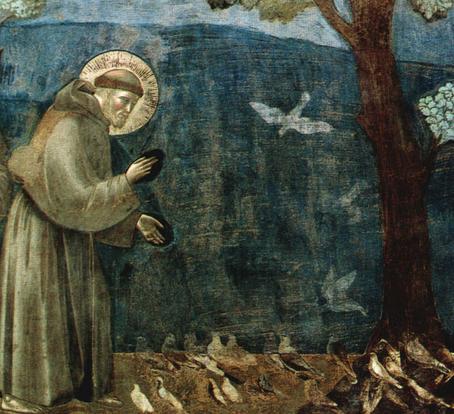
– Drawing on the inspirational life of Saint Francis of Assisi, the group discussed the importance of simplicity of consumption in being a follower of Christ. We cut out squares of hesian for our wallets to remind us of our responsibilty in caring for the cosmos and our fellow human beings. (wk 2)
– The act of baking bread at home, can be helpful in cultivating gratitude for our food and reflecting on our role in joining God in ‘arranging’ the natural world (wk 2)
– Reflecting on Bonhoffer’s use of the sign of the cross throughout his time in prison, we are reminded of a very old practice which can be useful in sustaining us and reminding to whom we belong. Though there are several variations, we used the thumb to mark a small cross on the forehead, between the eyes, lips, heart and shoulders accompanied by.. “Lord, be glorified in what I think, in what I see, in what I say, in what I desire, in what I do, and in where I go” (wk 3)
– Gratitude Journal: Studies show increased happiness, sleep, decreased depression and anxiety and improved blood pressure are associated with performing this task regularly (1 Thess 5:18, Ps 92:1-2). Record 5 things you are thankful for before bed each day for one month. Prompts to get you started: Opportunities, nature, food and drink, places, our bodies, dreams and hopes, memories, art, animals, people, happy and challenging experiences (wk 4)
– The placing of a stone in water to symbolise our commitment to Christ through baptism as we commit each day to live for Him (wk 5)
– Communion (wk 6)
Sing doxology:
Praise God, from whom all blessings flow.
Praise Him, all creatures here below.
Praise God above, ye heavenly hosts.
Praise Father, Son and Holy Ghost.
Amen.
Benediction (read by the leader):
May the peace of the Lord Christ go with you: wherever he may send you;
May he guide you through the wilderness: protect you through the storm;
May he bring you home rejoicing: at the wonders he has shown you;
May he bring you home rejoicing: once again into our doors.
References:
“Common Prayer: A liturgy for Ordinary Radicals” by Shane Claiborne et al pp. 271, 554
“Iona Abbey Worship Book” by The Iona Community pg. 111
 A great read, passed through to me by Noel Payne–thanks mate. Fits in really well as stimulus for our next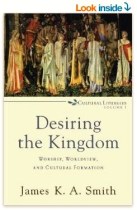


 Christ's Pieces